

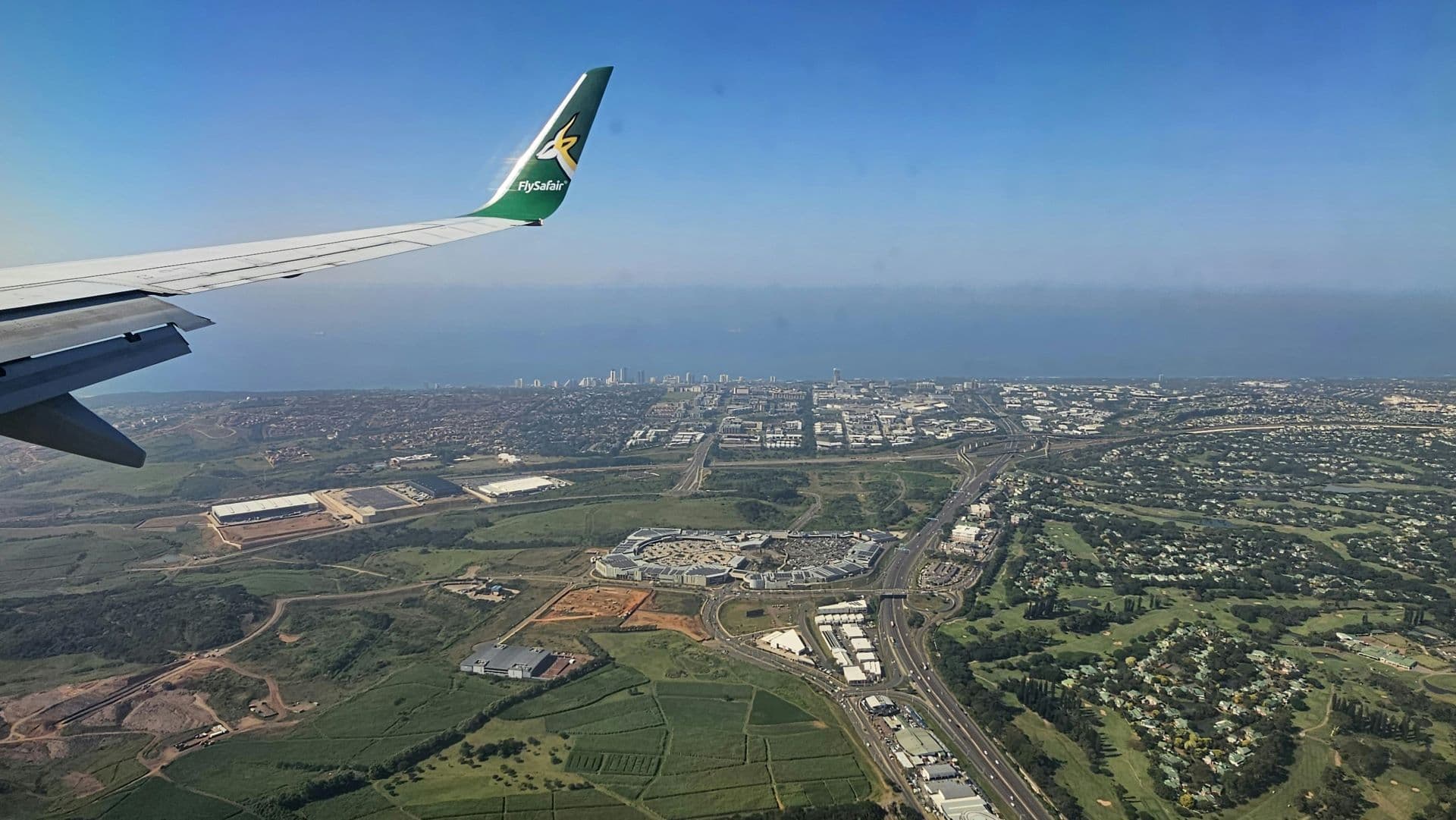
Air travel in South Africa sits at a fascinating intersection of aspiration and accountability. It is the invisible thread stitching together Cape Town’s coastline, the Kruger bushveld, Johannesburg’s economic pulse, and global gateways beyond Africa’s southern edge. Yet every ascent into the sky comes with an environmental ledger that is increasingly hard to ignore.
As tourism rebounds and aviation demand strengthens, South African airlines find themselves under sharper scrutiny. Not just for punctuality or price competitiveness, but for the carbon footprint trailing behind each flight path. The environmental cost of South African air tourism is no longer a background concern. It is now central to how airlines design fleets, how passengers choose routes, and how the country positions itself in a carbon-conscious global travel economy.

Aviation’s Growing Climate Spotlight
Globally, aviation contributes a relatively small but rapidly growing share of greenhouse gas emissions. The challenge is not just the volume, but the altitude. Emissions released at cruising heights have a disproportionately high warming effect, intensifying aviation’s climate impact.
South Africa’s aviation sector reflects a similar pattern, though shaped by unique geographic realities. Unlike dense European regions where rail can absorb short-haul demand, South Africa’s vast distances make air travel essential. A trip from Johannesburg to Cape Town, or Durban to George, is not a luxury shortcut in many cases. It is the only practical bridge between economic and tourism hubs.
This dependency creates a structural tension. Tourism growth is desirable, even vital for employment and GDP contribution, yet each additional flight intensifies pressure on emissions targets. The result is a sector balancing expansion with environmental constraint, a balancing act that is becoming more visible in policy discussions and corporate strategies alike.
The Carbon Reality of South African Routes
South Africa’s domestic and regional routes are particularly sensitive in the emissions conversation. High-frequency corridors such as Johannesburg–Cape Town are among the busiest in Africa, generating significant cumulative emissions due to volume rather than distance alone.
Short-haul flights are often less fuel-efficient per passenger kilometre because take-off and climb phases consume disproportionate fuel. In a market where tourism relies heavily on multiple short segments, the emissions intensity rises quickly.
Regional tourism routes into Southern Africa compound this effect. Flights connecting South Africa to Namibia, Botswana, Mozambique, and Zimbabwe support a broader safari and leisure economy. These routes are essential for multi-country tourism packages but add layers of carbon complexity that are harder to offset through efficiency alone.
Airlines Under Pressure to Decarbonise
South African carriers are increasingly operating under global environmental expectations shaped by investors, regulators, and international tourism markets. European travellers, in particular, are more aware of flight emissions, influencing booking behaviour and brand perception.
Airlines such as South African Airways, FlySafair, and Airlink are responding in different ways, but all face the same structural constraint: aviation decarbonisation is technologically difficult and capital intensive.
Fleet renewal has become one of the most immediate levers. New-generation aircraft such as the Airbus A320neo and Boeing 737 MAX series offer improved fuel efficiency, sometimes reducing consumption by up to 15 to 20 percent compared to older models. In South Africa, where older fleets were historically more common due to cost constraints, this transition is especially impactful.
However, fleet upgrades require significant investment. For airlines operating in tight-margin environments, especially in a recovering post-pandemic tourism market, balancing affordability with sustainability becomes a strategic dilemma rather than a straightforward upgrade cycle.
Fuel Efficiency as the First Line of Defence
Fuel efficiency remains the most direct and measurable way South African airlines reduce environmental impact. It is the aviation equivalent of tightening the screws in a complex mechanical ecosystem.
Operational improvements include lighter cabin configurations, optimised flight routing, and reduced taxi times at major airports such as OR Tambo International and Cape Town International. Even small reductions in weight or distance can scale into substantial savings across thousands of flights annually.
Flight planning systems now incorporate more advanced meteorological data, allowing pilots and dispatchers to select routes that reduce headwinds and unnecessary fuel burn. These incremental efficiencies may seem marginal on a single flight, but across a national network they accumulate into meaningful reductions.
South African airports are also investing in infrastructure improvements that support efficiency, including better air traffic sequencing and ground handling coordination. The goal is to minimise time spent idling on the ground, where fuel is burned without contributing to travel distance.
The Rise of Carbon Offsetting in Tourism
Carbon offsetting has become one of the most visible responses to aviation emissions, particularly within the tourism sector. In South Africa, it is increasingly integrated into booking platforms, corporate travel policies, and premium leisure packages.
The principle is simple: passengers or airlines invest in environmental projects that theoretically balance out the emissions produced by flights. These projects may include reforestation, renewable energy development, or community-based conservation initiatives.
However, offsetting is also controversial. Critics argue that it risks becoming a symbolic gesture rather than a structural solution. The effectiveness of offsets depends heavily on project quality, verification standards, and long-term sustainability outcomes.
In South African tourism contexts, offsetting often intersects with conservation projects that have dual value. For example, ecosystem restoration initiatives not only absorb carbon but also enhance biodiversity and support eco-tourism ecosystems in regions such as the Garden Route and Kruger buffer zones.
The challenge lies in ensuring transparency. As demand for “green travel” grows, so does the risk of greenwashing, where environmental claims exceed actual impact. This has led to increased calls for standardised reporting frameworks across airlines and tourism operators.
Sustainable Aviation Fuel: A Quiet Revolution
If carbon offsets are the present-day mitigation tool, Sustainable Aviation Fuel represents the future frontier.
Sustainable Aviation Fuel, or SAF, is produced from renewable sources such as used cooking oil, agricultural waste, or non-food biomass. It can significantly reduce lifecycle carbon emissions compared to conventional jet fuel, sometimes by as much as 70 percent depending on production pathways.
For South African aviation, SAF presents both opportunity and constraint. The opportunity lies in the country’s agricultural base and potential feedstock availability. The constraint is infrastructure and cost. SAF is currently far more expensive than traditional jet fuel and is not yet widely produced at commercial scale within the region.
Airlines operating in South Africa are beginning to engage with SAF through international partnerships and trial blends on select routes. However, widespread adoption remains dependent on global supply chain development and local investment in production facilities.
The tourism sector could play a catalytic role here. As international travellers increasingly demand lower-carbon travel options, destinations that can offer SAF-enabled flights may gain competitive advantage in premium travel markets.
Aircraft Technology and the Efficiency Curve
Aircraft design continues to evolve as manufacturers respond to climate pressure. Newer aircraft are built with composite materials that reduce weight, more efficient engines, and aerodynamic refinements that improve lift-to-drag ratios.
In South Africa, where long domestic and regional routes dominate tourism flow, these improvements are particularly relevant. A more efficient aircraft on the Johannesburg–Cape Town corridor, for example, can reduce fuel burn per passenger significantly over time due to high route frequency.
Cabin design also plays a role. Higher seat density configurations can reduce emissions per passenger, although this introduces tension between comfort expectations and environmental efficiency. Airlines must navigate the delicate balance between passenger experience and sustainability performance.
Digital aviation systems further enhance efficiency. Predictive maintenance, real-time fuel monitoring, and AI-assisted flight planning are increasingly part of modern fleet management strategies. These tools allow airlines to fine-tune operations in ways that were not previously possible.
South African Airlines and Their Environmental Strategies
South African Airways has historically carried both national symbolism and operational complexity. Its restructuring phase has placed renewed emphasis on efficiency and sustainability, particularly as it rebuilds its fleet and route network. New aircraft acquisitions are central to its environmental strategy, with fuel efficiency playing a major role in route planning decisions.
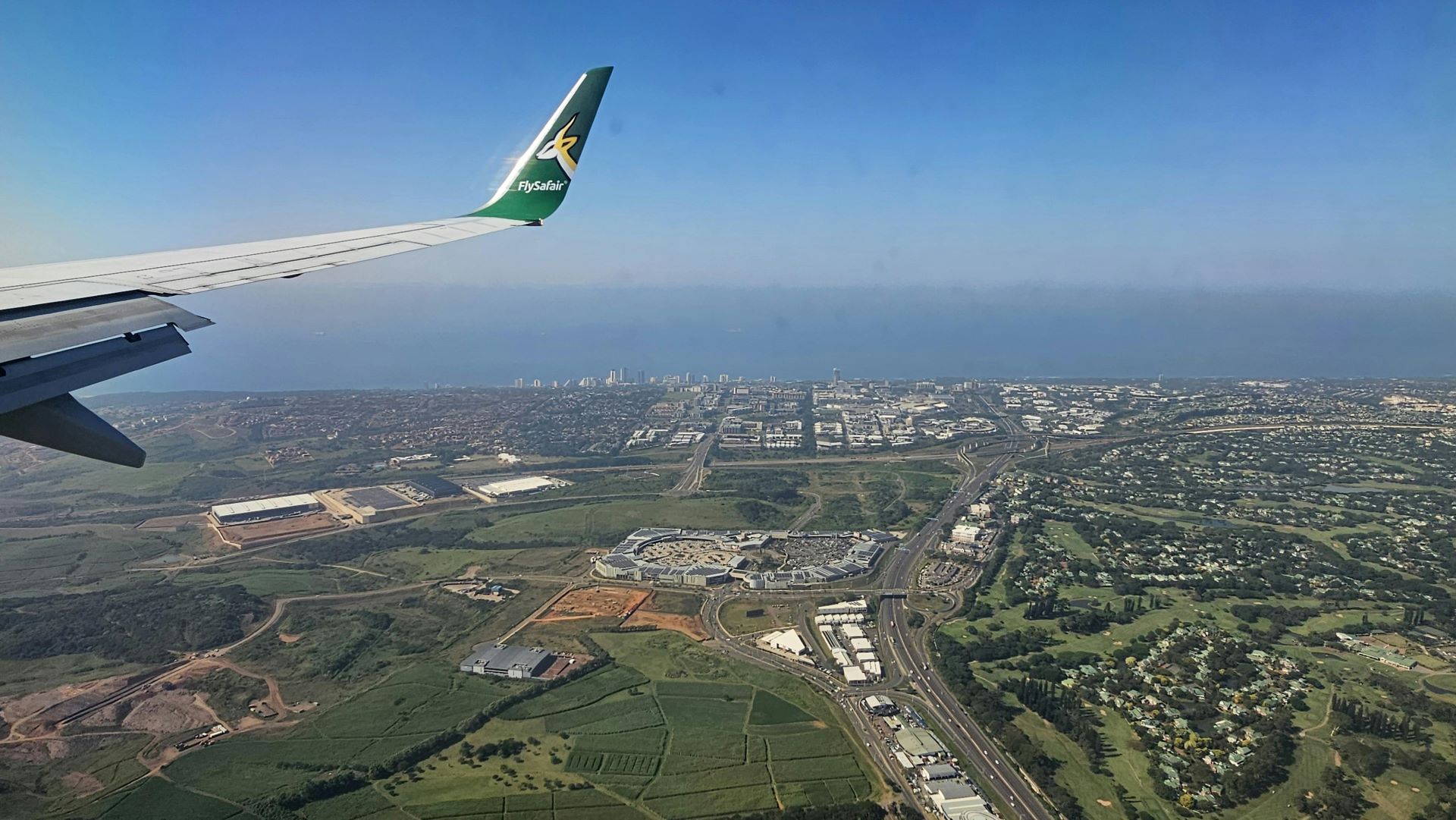
FlySafair, operating primarily as a low-cost carrier, demonstrates how efficiency and environmental performance can align. Low-cost models inherently prioritise high aircraft utilisation, fast turnaround times, and simplified fleet structures, all of which contribute to lower emissions per passenger kilometre when managed effectively.
Airlink, with its strong regional network, operates in a different niche. Its focus on connecting secondary cities and regional tourism hubs means it plays a critical role in dispersing tourism flows. While its routes are essential for accessibility, regional aviation remains emissions-sensitive due to shorter flight distances and multiple take-off cycles.
Across all carriers, a common theme emerges: sustainability is no longer a separate initiative. It is becoming embedded into core operational decision-making.
Tourism Demand and Environmental Tension
South African tourism is heavily dependent on air connectivity. International arrivals fuel urban tourism in Cape Town and Johannesburg, while domestic flights support weekend travel, business tourism, and leisure escapes across provinces.
This creates a paradox. The same connectivity that drives tourism growth also drives emissions growth. The challenge is not to reduce tourism, but to decouple it from environmental degradation.
Luxury tourism segments are beginning to lead in this transition. High-value travellers are more likely to accept carbon offset contributions or select airlines based on sustainability credentials. Budget tourism, however, remains more price-sensitive, limiting the extent to which environmental costs can influence decision-making.
Destination marketing organisations in South Africa are increasingly aware of this tension. Sustainability messaging is being integrated into tourism branding, particularly in eco-sensitive regions where conservation and tourism are tightly linked.
Infrastructure and Policy Direction
Airports and government frameworks play a critical role in shaping aviation emissions trajectories. South Africa’s major airports are gradually improving energy efficiency in terminal operations, while also exploring renewable energy integration.
Policy frameworks are increasingly aligning with international aviation climate goals. Pressure from global aviation bodies and climate agreements is pushing for more structured reporting of emissions and clearer decarbonisation pathways.
However, implementation remains uneven. The complexity of aviation regulation, combined with economic pressures in the tourism sector, means progress is gradual rather than transformative.
What is emerging instead is a layered approach: incremental efficiency improvements, partial fuel transitions, and market-based offset systems operating simultaneously.
The Future of Low-Carbon Flight in South Africa
The future of South African air tourism will likely not be defined by a single breakthrough but by the convergence of multiple technologies and behavioural shifts.
Sustainable Aviation Fuel may scale gradually, particularly if regional production becomes viable. Aircraft efficiency will continue improving through incremental design innovation. Digital optimisation will refine fuel use in real time. And carbon markets will continue shaping traveller expectations.
At the same time, tourism patterns may evolve. There is growing interest in longer stays, fewer short-haul hops, and more immersive travel experiences that reduce flight frequency per visitor.
South Africa, with its long-haul tourism appeal and strong regional diversity, is well positioned to adapt to these changes if it aligns aviation policy, airline strategy, and tourism marketing into a coherent sustainability narrative.
A Sector in Transition
The environmental cost of South African air tourism is not a static figure. It is a moving target shaped by technology, behaviour, policy, and demand.
Aviation emissions will remain a challenge, especially in a geographically vast country where air travel is essential. Yet the direction of change is clear. Efficiency is improving, alternative fuels are emerging, and carbon accountability is becoming embedded in how the industry operates.
The sky over South Africa is not becoming quieter, but it is slowly becoming more conscious of its footprint. And in that awareness lies the foundation of a more sustainable tourism future.
Gerald Ferreira
Specializing in uncovering the best flight deals, ticketing strategies, and essential travel tips to help you navigate global destinations with ease and confidence.